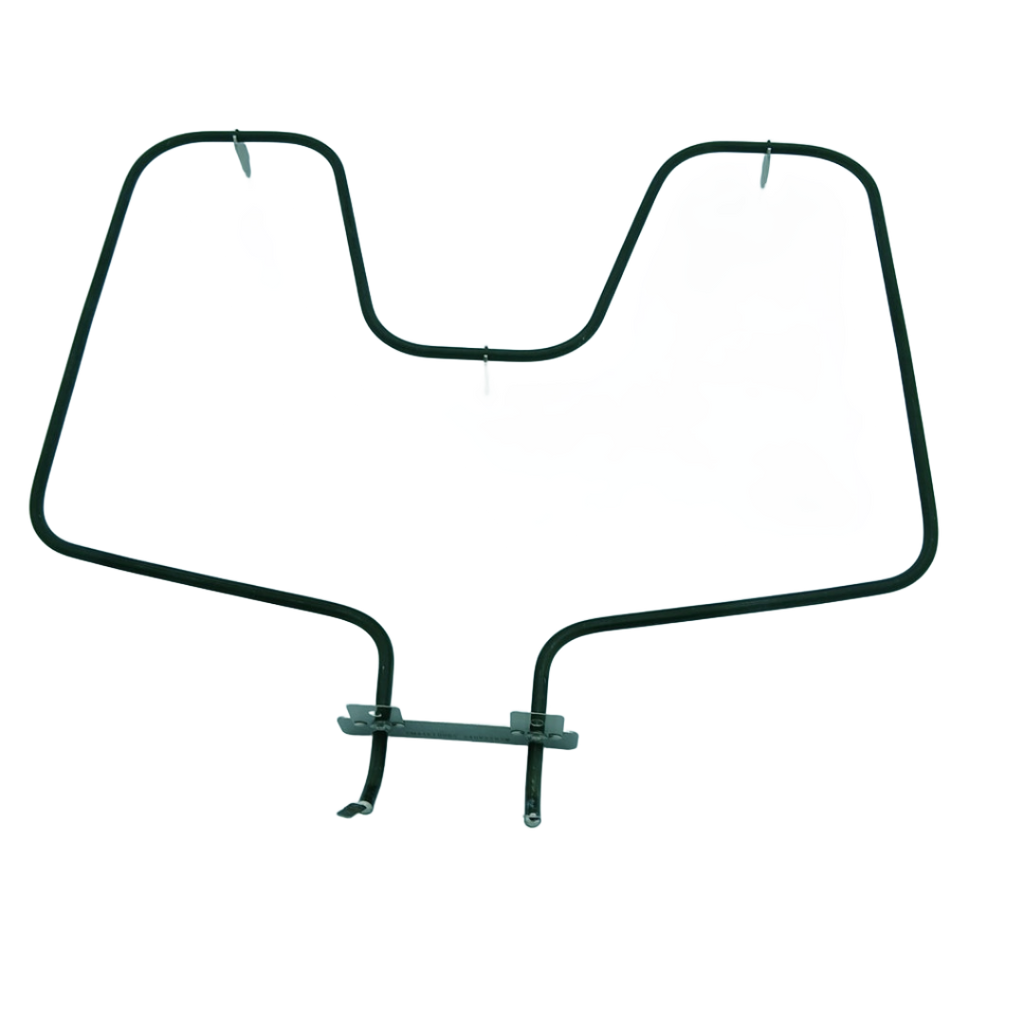
Test the element electrically before replacing. Before ordering a new bake element, verify it's actually faulty. With power disconnected, access the element and disconnect the terminal wires. Use a multimeter to test the element for continuity—you should read approximately 15-50 ohms depending on the element wattage (varies by model). An infinite reading (OL) means the element heating coil is broken and needs replacement. A reading near zero indicates a short circuit. Also visually inspect for cracks or breaks in the element sheath. This diagnostic step confirms element failure before you spend money on a replacement.
Check the terminal wires and connections before blaming the element. An estimated 25% of "bake element failures" are actually caused by loose, corroded, or burned terminal wire connections, not a failed element. Before ordering a new element, inspect the terminal connections for corrosion, loose wires, or burned insulation. Clean corroded terminals with fine sandpaper and tighten loose connections. If the wires are burned or damaged, repair them before installing a new element. Installing a new element with damaged wires causes immediate failure.
Verify the oven control board is sending power to the element. If your new element doesn't heat after installation, the problem may be the oven control board, not the element. The control board sends 240V power to the element when the oven calls for heat. A failed relay or damaged circuit on the control board prevents element operation. Before assuming the new element is defective, test for 240V at the element terminals when the oven should be heating. No voltage means the control board is the problem, not the element.
Clean spills immediately to extend element life. Bake elements fail prematurely when exposed to moisture from spills, drips, and food debris. Liquids that contact the hot element cause thermal shock, creating cracks and weak spots that lead to element failure. After installing your new element, clean spills immediately and avoid using the self-clean cycle excessively (self-clean temperatures stress elements). Keeping the oven clean extends element life from 8 years to 15+ years.
Element wattage affects heating performance. Bake elements come in various wattages (2500W, 3000W, 3500W, etc.) for different oven sizes and models. Always replace with the exact same wattage as your original element. Installing a lower-wattage element causes slow heating and poor baking performance. Installing a higher-wattage element can overload the circuit and damage the oven's electrical system. The element wattage must match your original element exactly—check your oven's service manual or the markings on the old element to verify correct wattage.
Thermal fuse can mimic element failure. If your oven runs but doesn't heat, the thermal fuse (safety device) may be blown, not the element. The thermal fuse cuts power to the bake element if the oven overheats (usually from a clogged vent or failed cooling fan). Test the thermal fuse for continuity before replacing the element. If the fuse is blown, replace it AND clean the entire exhaust system—otherwise it will blow again immediately. An estimated 20% of "no heat" diagnoses are actually blown thermal fuses, not bad elements.
Bake element lifespan depends on usage frequency. Bake elements typically last 10-15 years with normal use (baking 5-7 times per week). Heavy use (daily baking or frequent self-clean cycles) reduces lifespan to 5-8 years. Light use (baking 2-3 times per week) extends lifespan to 15+ years. If your element failed after only 3-5 years, check for usage patterns, spills, or self-clean cycle frequency that may have accelerated failure. Reducing self-clean cycles from monthly to quarterly extends element life significantly.
- Oven won't heat in bake mode (no heat output)
- Oven heats very slowly (long preheat times)
- Oven doesn't reach set temperature
- Oven produces uneven heat (hot spots and cold spots)
- Bake element doesn't glow red when oven is on
- Visible cracks or breaks in element sheath
- Element blistered or bulged
- Element glows only in certain sections (partial heating)
- Element discolored or corroded
- Oven trips circuit breaker when set to bake
- Element produces sparks or arcing
- Oven makes popping or crackling noises
- Food burns on bottom but remains undercooked on top
- Oven temperature fluctuates wildly
- Bake mode not working (broil mode works fine)
Whirlpool refrigerator replacement parts, Frigidaire refrigerator replacement parts, GE refrigerator replacement parts, Kenmore refrigerator replacement parts, KitchenAid refrigerator replacement parts, LG refrigerator replacement parts, Maytag refrigerator replacement parts, Whirlpool refrigerator drawers and glides replacement, Whirlpool dishwasher replacement parts, GE dishwasher replacement parts, KitchenAid dishwasher replacement parts, Maytag dishwasher replacement parts, Frigidaire dishwasher replacement parts, Kenmore dishwasher replacement parts, Whirlpool washer replacement parts, GE washer replacement parts, Maytag washer replacement parts, Kenmore washer replacement parts, LG washer replacement parts, Whirlpool dryer replacement parts, GE dryer replacement parts, Maytag dryer replacement parts, Kenmore dryer replacement parts, LG dryer replacement parts, Whirlpool range replacement parts, GE range replacement parts, Whirlpool stove replacement parts, GE stove replacement parts, GE oven replacement parts, GE microwave replacement parts, buy Whirlpool refrigerator parts online, buy GE dishwasher parts online, replacement Kenmore washer parts for sale, buy Maytag dryer parts, LG washer replacement parts online, KitchenAid refrigerator parts for sale, Whirlpool stove and range replacement parts